10/27/08

Sometimes I Need Help Cleaning My Plate, Mom

By Keith Fisher

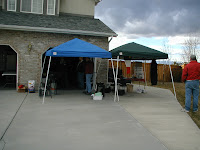
Last time. I told you I was having a personal writer’s retreat. I attached a picture of my temporary office. I made a dinner that night of Pork chops cheesy mashed potatoes and green beans. Sitting there with all that food I regretted being by myself. I got over it, however, when I ate most of the dinner and went back to work.

As the evening wore on, my stomach began to complain. I had eaten too much. This brings us to an interesting subject. How much should I cook for how many people will be there?

I’m sure I’ve told this story before, but it illustrates my point so I’ll tell it again. Several years ago, my wife had to work on Saturday. I needed to work in my yard, and I had some weeding to do in the garden. I wanted to do something nice for my wife, since she had to work a Saturday so I got the Dutch oven out. (Notice I said THE Dutch oven? Yes in those days I only had one).

I set up the Dutch oven in the back yard. Added a deer roast from the freezer and started cooking. After awhile I pulled some potatoes from the garden and some carrots too, added them to the pot and went back to work in the garden.

After mowing the lawn, I added a little water in the bottom, I didn’t want to burn it. And went back to work. A little while before she was due home I picked some corn and broke the ears in half. I placed them in the top of the oven and realized I had too much food.

My solution was I called my dad and brother, they came over, my wife loved having dinner cooked for her, and I had discovered a new way to entertain in my back yard. I loved to entertain with a barbecue but I discovered that if I was cooking in Dutch ovens and my guests knew it, I’d get far more people coming to dinner. It was great, I was a hero, and I didn’t have to eat too much.

Dutch ovens can increase your social life, and you get to decide what's for dinner.

the portions are the same as in the kitchen. one potato each, one chicken breast, etc. always cook a little more than you think you need. people tend to come out of the woodwork when you cook Dutch oven.


Return to the Neighborhood.


10/24/08

Emergency Preparedness

By Keith Fisher


I’m on a personal writer’s retreat today. I’m so close to being finished with this book I just had to take a few days and knock it out. Anyway, as you might have guessed, I’m not disclosing the location because I don’t want to be interrupted. Suffice it to say I’m someplace in the state of Utah.


You know it sure is nice to have your own camp trailer so you can disappear. Of course that brings up an interesting subject dear to my heart. Years ago, before the invention of all our modern conveniences, like dirt, I used to store all my camping gear neatly on a shelf. I didn’t have a garage so the shelf was in a tin shed.


Anyway, when I got ready to go camping, I’d pull up to the shed, toss everything into the truck, and drive into the mountains.


When I got to where I wanted to camp, I quickly discovered the things I’d forgotten to bring. Little things like food, a sleeping bag because . . . oh yeah, I let my brother borrow that, and a coat. Along with the irritation of forgetting things, came the problem of tripping over all the unneeded and useless equipment. The stuff I should have discarded years ago, but in my haste to unpack after camping the time before, I just put it back on the shelf.


Oh the joys of camping in the good old days.


Then, I acquired a wife. (Nice invention, I think every man ought to be owned by one). Shortly after our vows were said, She wanted to prove to me that I’d made a wise choice. She agreed to go car camping with me. Notice I said car camping, and not backpacking? I wanted to take along the modern conveniences because we all know it’s a good idea to be considerate of a lady. I even planned the trip. I took the things I needed, and not those things I didn’t.


It went well, except we were on a four-wheel drive trip, way up in the mountains. No bathroom, no running water, and our bed was a foam rubber pad on the floor of a tent. (But it was a cabin tent so she didn’t have to get dressed behind a tree).


On top of all that, It rained most of the time. We were above 9,000 feet so it was cold at night. I had fun exploring old mine shafts, playing in the mud with my truck, and building shelters from the rain so she could come out of the tent.


Now I should be fair and tell you I’m an inconsiderate oaf, but I think you’ve already surmised that. In my defense, however, I would say I warned her. After that trip, which, by the way, will go down in my book, as one of the best camping trips I ever took. Not just because I spent time in the mountains with my wife, but because I actually had everything I needed on the trip, and nothing I didn’t.


Anyway, after we came home, I began to look for lightweight campers to go on my truck. When I found one, in a field, I brought it home. A whole New World of camping opened up for me. Gone, were the days of the shelf. The camper was filled with everything I needed and some things I didn’t. Well you get the picture.


As you might have guessed, I needed a trailer so I didn’t have to load the camper on the truck. I could back up to the trailer, hook it on and go. I also needed one, because I now had more stuff to fill it with.


When my daughter was born, my wife let it be known that yes, we now needed a trailer with a bathroom. (Enough said about that). We found one in another field. Remember the point was to get a trailer with a bathroom? Well, the owner guaranteed the plumbing worked.


Can anyone say, Buyer beware? I won’t bore you with all the details, well, I might mention it sometime, on a cold rainy night, when I want to tell ghost, and horror stories. Lets just say that in 2002, after a very disappointing deer hunt, spent in the company of my sick brother. I took my truck into the shop and made the mistake of telling my wife, "Let’s go look at new trailers."


My fate was sealed. But you know . . . I kind of like it. Here I sit, writing this blog in the comfort of my trailer. I’m going to take a shower in a little while. For Lunch, I might make pork chop casserole in a Dutch oven.


Okay, I admit it. Life is better without all the fuss of retrieving gear from the shelf. I can hook up the trailer and be gone in moment. We have food stored in the cabinets, clothes in the closet. Towels on the towel rack. The Light-weight pots and pans live in the trailer, (not that we ever use them, with Dutch ovens in the cubby hole outside.)


My neighbor is fond of telling me that I have the best 72-hour kit there is, parked in my driveway, outside my house. If you’re into that kind of thing, it’s a good excuse. "It’s not a waste of money. I’m preparing for emergencies."


Jumbalaya


Recipe provided by Tom Jackson
Ingredients:


12" Dutch oven or heavy pot
1 1/2 lbs. cut up chicken
1 lb. smoked beef sausage, chopped
1 lb. cubed ham
3-4 chopped red/green peppers
1 or 2 chopped onions
2 cups sliced celery
1 large can chopped tomatoes
1 cup rice
1 cup water
several minced garlic cloves (to taste)
2-3 oz. hot sauce
1/2 lb. tail off shrimp (optional)


Preparation:Brown the chicken, sausage and ham then add the peppers, onions, celery, chopped tomatoes, rice, water, minced garlic cloves and hot sauce. Bake in your Dutch oven or large pot until rice is completely done - approximately 1 hour.
Shrimp or other seafood like crab meat may be added for extra flavor, but add only for the last 5 minutes of cooking.


Return to the Neighborhood.


10/20/08

Sometimes, Simple is Best

By Keith Fisher

I went camping last weekend. I had planned to leave the house by ten, noon at the latest. I could’ve been writing or doing other work but I ended up doing busy work while I waited for my brother.

When we arrived, I barely had enough time to level the trailer and light a fire in my portable fireplace before darkness fell. (Not enough time to cook a Dutch oven meal.)

So there I sat, enjoying the comforting glow of a great campfire, when my hunger made my mind stray to thoughts of what I could make for supper. I asked Dad, and he didn’t want anything. My daughter had eaten chow mein before we left, so I was left with my hunger and thoughts of a solitary meal.

I grabbed the bratwurst and hotdogs. The marshmallow roasters, condiments, buns and a soda. I staggered back to my chair and proceeded to roast a brat.

After watching awhile, Dad caved in. He asked for one. I gave him a roaster. My Daughter came out of the trailer, sniffed the air and asked for a hot dog.


Ahh . . . life’s simple pleasures. It wasn’t Dutch oven cooking but it was just as good that evening. The icing on the cake came when the setting sun cast beams of light around the backside of Mount Timpanogos.

There was a full moon all night and the fish were able to eat at night, so fishing the next day, left a lot to be desired. I got some work done on my novel, and I made banana pancakes for breakfast and sandwiches for lunch.

My purpose in going on this trip was to let my daughter get some fishing in and to be with my family. I also hoped to get some writing done. My Dutch ovens didn’t get used, but I got some editing done. We had simple meals but they were good. My Dutch ovens will be ready for next time, and hopefully, my editing will be done.

One word of advice: If you have a camp trailer, turn off your propane between camping trips. I got up to reset the warning light on the fridge about thirty times before my brain figured out that maybe there was a connection to the fact the furnace wasn't working. 1:30 a.m. is not a good time to find out that both Propane tanks are empty. I had to use my shorter, cooking bottle, and I had to rig it so it would fit.

Here's my recipe for banana pancakes. Enjoy.

Banana Pancakes

Mix up your favorite pancake batter, cut up a banana into half-inch chunks. Sprinkle them on the pancake before turning pancake over. Cook other side, and you have Banana pancakes. This also works for other kinds of fruits and raisins. Let me know if you find a good combination.


Return to the Neighborhood.

10/15/08

Comfortable Counters

by Keith Fisher


When you cook outdoors, do you use a table? Just like in your Kitchen at home, It’s easier to work from some kind of counter space. Whether it’s opening cans, rolling out bread dough, or marinating meat, the tasks are made harder by using a flat rock, (if you can find one). Even a pick-nick table isn’t the best surface, especially if the sloppy family used it last. You know, Joe, Sue and their kid, Messy Michael.

There are many portable camp tables on the market,
look here. Most of these are lightweight but being so, they tend to flatten if you set anything heavy on it, (Like a full Dutch oven).

When we started competing, we used a long, but narrow card table. It was made special as a base for a sewing machine, so the legs were a little longer than a normal card table. Making the counter height about three feet. We used that table for the first year and I noticed a pain in my back from leaning over. I measured and decided that if the tabletop was just a foot higher I could roll out piecrust in comfort.

I bought some one-inch PVC pipe, cut it to specific lengths, and painted it brown to match the color of the table. It worked great. All I had to do was slip my extensions over the legs making the height just right. However, there wasn’t enough room for two cooks working at the same time.

At that time, most cook-off directors provided a table of some kind to use for preparation. We stacked our hot and cold water coolers on one end and used the rest for prep. We found ourselves fighting over the card table, and since my partner did most of the mixing and preparing, and I did all cooking, I lost the battle.

My life changed, when I watched a team get ready to cook. Before putting a tablecloth on the banquet table, they slipped 9-inch extensions over the legs at the bottom and raised the table to countertop height. In light of my card table extensions, I wondered why I hadn’t thought of the banquet table. I used 1 ½ inch PVC and made several extensions.

When the Mighty-Lite Table Company came out with a sturdy plastic version of the banquet table, we all wanted one. I got a six-foot version when the generic brand came out. I used my extensions and had several countertop height tables to work from. I could wash dishes on one end and knead bread on the other. I even had room for my chuck box. Now
Mighty-Lite makes a table with height adjustable legs, but for other tables, consider the extension.

Keep in mind a 9-inch extension only works on a table with a curved bottom leg. See the picture. If your table has straight legs, you will need to make your extensions longer to accommodate the length.

Now, a note about use, When you use your plastic table as much as I do, and you take it in and out of the back of your truck, you’ll probably notice dirt and grease collect on the table top. It’s okay, just remember to use a tablecloth and periodically clean the surface with a water and bleach solution. The solution not only cleans, but it sanitizes to protect against the sloppy family. You have to scrub harder for some grease stains from the back of your truck. And keep in mind that a hot Dutch oven will melt plastic. get a piece of wood or use a trivet.

Tables can be a blessing when you have one, they can be a curse when you don't. Making it comfortable to work at them, makes cooking funner.


Return to the Neighborhood.


10/13/08

Cleaning House


by Keith Fisher

My wife brought home two slot cabinets built by my father-in-law. When my wife asked if I wanted them, I agreed, thinking I could use them to store printer paper and sort Family history.

I don’t know why he built them so deep. I worked in my office re-arranging things, trying to make the cabinets fit. Two hours later, I finally admitted I just don’t have room in a 9X8 office I share with my daughter. Anyway, I sat back and gazed at the mess, then remembered I have a blog to write.

With the state of my office, and not having any idea what to write, I decided to talk about cleaning your camp kitchen. It’s the time of year when some people put their camping stuff away, and that includes Dutch oven tools.

Before you relegate your pots to the shelf, I’d like to try once again, to convince you to keep cooking throughout the winter. Many an ice fishing or tubing party can be greatly enhanced by the tasty treats you make in your Dutch oven. You can be a hero too.

If you’re determined, however, to put it away, consider how much easier it will be in the spring if you take the time now, to care for your equipment.

First we need to check the cast iron. Run your fingers over the surface. Does it feel smooth? Is it rough like sandpaper? Does it look like it might rust? If it is smooth it will probably be okay. If it feels rough put a thin layer of vegetable or olive oil on the surfaces. Then, store the lid on a different shelf. It allows the air to circulate and avoid condensation. In the spring, you may need to heat up you oven to burn off the oil, but it will keep the iron from rusting.

Next, let’s talk about tables and other metal tools. If your table has rust spots on it, or it looks grungy from all the charcoal dust. Get a wire brush and brush off the rust. Go to the hardware store and buy some barbecue paint. It comes in a spray bottle, and will withstand the heat of charcoal. I repaint my table once a year anyway. The new clean surface helps me look like I know what I’m doing. Some tools won’t need the barbecue paint. I recommend flat, or glossy-black (your choice). Paint lid holders, charcoal starters, and lid lifters. Clean you charcoal bucket, and don’t forget to clean that pancake batter spill from the inside of your chuck box.

If you use a plastic drawer chuck box, you will find a little bleach goes a long way. Mix three tablespoons bleach in a spray bottle of water. Use gloves. Check your spoons and spats, all your tools. Look for signs of wear, or breakage. Toss the tools you never use, add those you think you’ll need. Fill the spice containers. A dollar store has low-cost tools, and tea towels. You can always use a good pair of tongs.

Now that you’ve done your house cleaning, take your kitchen and get out and use it one last time. But consider the winter. A hot pot never rusts, and full stomachs will ever be grateful.

Return to the Neighborhood.

10/10/08

Taking your Kitchen


by Keith Fisher

On a previous blog, I promised I would talk about chuck boxes, but I’ve been getting sidetracked with other, more exciting subjects. Since the weather is turning and with it, thoughts of getting our equipment into shape for the big Deer hunt. I think I’ll get back to it.

When I was a kid growing up in Utah, it was fairly easy to get a license and go hunting. Most of the hunting population didn’t even make plans about where they were going to hunt until the end of September. We usually got together and listened to the scouting reports from one or two who had gone on the archery, or some other, earlier hunt. From the report, we decided where we would go and usually opted for the customary place.

We had a special canyon we hunted every year. We knew all the names and the geography. It felt good to know some things never changed. Then the DWR rewrote the rules.

Now we have to submit to a drawing, choose which hunt we are going to hunt, and which area we plan to go, all before the end of January each year. If I choose to hunt on the archery hunt, I’m done and can’t hunt deer any more that year. I must decide in the winter before, which hunt will be most successful and which area will have the most deer. Unless I want to hunt alone, I must pick the same area my family chooses.

With all the hoops we have to jump through, it’s not hard to visualize what happened this year. I went online on the last day to register, one hour after the deadline. All my other family members have similar stories, and needless to say, We’re going fishing on the deer hunt opening. But I digress, I promised I’d talk about Chuck boxes.

Everyone has some sort of container for the tools it takes to cook and clean up in the outdoors. I started with a storage tub and bucket. Everything went downhill after that.

In many cook offs, people were judged for their equipment, so I wanted something that looked the part of the old west, but was still functional as a transportation box. I ended up building the refrigerator size Chuck box I used to store Dutch ovens in. It’s not only as big as a refrigerator, it’s heavy too. I soon wore out and began to think about other ways.


My next camp kitchen was designed to be like an old chuck wagon box and I used thin plywood and light materials. Being four feet wide. It was awkward to carry and became a burden to move for one person. At this time I also designed a pot box, or Dutch oven storage box. It was the perfect size to place two washtubs on top, next two the end of a banquet table. We washed dishes while sitting in a camp chair. Carrying even that was a two-man job.


At that time, I noticed a set of clear plastic drawer cabinets on sale and got an idea. I had never seen anyone use those for a camp kitchen, and although I can’t prove it, I think I was the first to use one. Now if you go to cook offs, you may see many of them.


The Refrigerator sized box now stores Dutch ovens and collects dust in my carport. (It has to. Who would move it?). The wide box remains in my back yard. I use it to cook in the back yard. The plastic drawer cabinet sits in my dining room. We keep it filled with all the tools we need to cook in camp. One person can put it in the back of the truck and it sits easily on a picknic table.

Whatever you use, it should be easy to carry and simple to use. It should hold all the tools you will need to be successful, and don’t forget to stock it with toothpicks.


Return to the Neighborhood.

10/6/08

Shelters and Cooking Tents

By Keith Fisher


We had heavy rain over the weekend at my house. It looks like difficult weather has come to stay. Perhaps it’s time for us to talk about shelters and cooking tents.


I remember setting up to cook between two buildings at the Davis County Fairgrounds in Farmington, Utah. I didn’t have an awning, tarp, or anything. We were a little worried when the fog rolled in off Farmington Bay, but it soon burned off and the sun shined.


It was a great day. Many folks learned about Dutch oven cooking, and all the food was delicious. The success was short lived, however, by afternoon, thick clouds rolled in and rain seemed eminent. We hurried to finish and get packed, but the water put out my fire.


Wind driven rain and hail got into the drawers of my chuck box. At one point, I noticed a river of water dripping off my cowboy hat. It could’ve filled a five-gallon bucket in minutes. We were wet, cold, and miserable. I had to clean the rust off of everything when I got home.

On another occasion, I stood shivering under two Easy-Ups. the wind and rain was coming down in horizontal sheets. I was the advisor for my ward’s Varsity scouts while they competed in the Scout Expo cook off. In an effort to get warm, I turned my backside to a propane stove and caught my shirttail on fire. The boys did well, the food was good, but everyone wondered about my ability to lead boys.


Over the years, I’ve cooked under many covers and in many shelters. I even cooked inside a few buildings. I watched portable awnings blow away, and I’ve cooked in the open air. Here are my conclusions.


When you cook outdoors, you must deal with wind, fire, rain, snow, and sunshine. Too much of these can make your day miserable. A good shelter can help. If you opt for the open air, remember you’re leaning over a fire. Why add more heat to you’re body by standing in the hot sunshine?


A portable awning works well for this. I call these Easy Ups after the brand name. There are a few brands of these and if you keep an eye out, most of the stores put these on sale after the season. The last one I purchased cost $65.00 on sale and it’s better than my other one, which cost more. There are two standard sizes of this type of shelter, 12X12 and 10X10. The latter size fits in a parking space and can be taken almost anywhere.


Another shelter that works well, is the plain old tarp. If you can tie off four-corners, or use a frame, this can be the cheaper solution. Cooking under your awning attached to your camp trailer can work fine, but as I found out last summer, microburst winds can cause great heartache.


There are portable car garages, and makeshift carports that work well but most are too large for just one camp kitchen. If there is a pavilion use it. But keep in mind if you are too closed in, you’ll breathe the fumes from your charcoal.

I cooked under my carport one winter, using a cheap brand of charcoal. I had a cold at the time, and I believe the overdose of chemical fumes made my cold worse. By January, I had pneumonia. I threw my stock of cheap charcoal away, and started cooking in a less sheltered area.

In the case of the driving rain, I recommend an anchored cover. Close in one or two sides to keep the wind out, but allow for a draft to carry away the fumes. Ideally, you will have a shed awning with three sides closed in and a blower vent above the cooking table. But that’s the subject for another time.
Return to the Neighborhood.